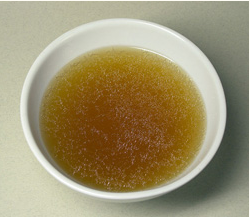
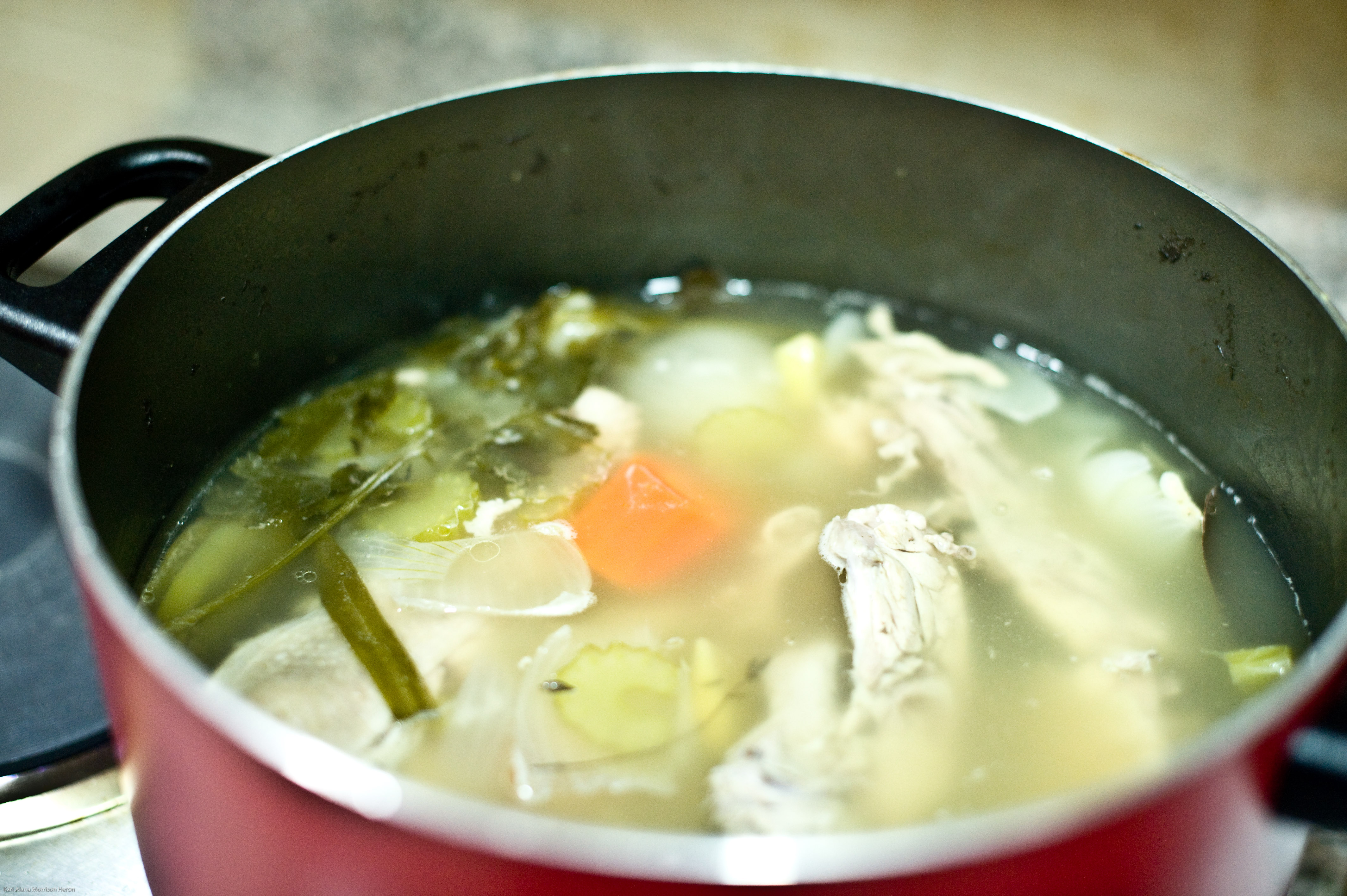
Fish for nearly all dishes is better if boned before cooking; it is also economy to do this, as the bones can then be used for stock for fish soups. These soups, although not well known here at present, are a valuable food; they are easy to make, wholesome, and nourishing. After the fillets of fish have been removed, directions for which are given amongst the fish recipes, take the bones, wash them well in cold water, and cut away any black substance that may be adhering to them. Break them up and put into a saucepan with a teaspoonful of salt; when it boils remove the scum and put in one dozen white peppercorns, a fagot of herbs, one onion, and one carrot; boil steadily for two hours or longer, strain through a sieve into a basin, and it is ready for use.
Thursday, February 19, 2015
FISH STOCK -2
Fish for nearly all dishes is better if boned before cooking; it is also economy to do this, as the bones can then be used for stock for fish soups. These soups, although not well known here at present, are a valuable food; they are easy to make, wholesome, and nourishing. After the fillets of fish have been removed, directions for which are given amongst the fish recipes, take the bones, wash them well in cold water, and cut away any black substance that may be adhering to them. Break them up and put into a saucepan with a teaspoonful of salt; when it boils remove the scum and put in one dozen white peppercorns, a fagot of herbs, one onion, and one carrot; boil steadily for two hours or longer, strain through a sieve into a basin, and it is ready for use.
FISH STOCK -1
Place a saucepan over the fire with a good-sized piece of sweet butter and a sliced onion; put into that some sliced tomatoes, then add as many different kinds of fish as you can get oysters, clams, smelts, pawns, crabs, shrimps and all kinds of pan-fish; cook all together
until the onions are well browned; then add a bunch of sweet herbs, salt and pepper, and sufficient water to make the required amount of stock. After this has cooked for half an hour pound it with a wooden pestle, then strain and cook again until it jellies.
VEGETABLE STOCK.
To 4 qts. water allow 1 pint lentils, or rather less than 1 pint haricots. In addition allow 1 carrot, 1 turnip, 1 onion, and 1/4 head of celery. Clean apple peelings and cores, and any fresh vegetable cuttings may also be added with advantage. For white stock, use the white haricot beans, rice, or macaroni in place of lentils or brown haricots. Soak the pulse Overnight, and simmer with the vegetables for 4 hours. Any stock not used should be emptied out of the stockpot, and boiled up afresh each day.
BROWN SOUP STOCK
Ingredients: 6 lbs. shin of beef, 3 to 6 quarts cold water, 1 bay leaf, 6 cloves, 1 tablespoon mixed herbs, 2 sprigs parsley, 1/2 cup carrot, 1/2 cup turnip, 1/2 cup celery and 1/2 cup onion.
Wipe beef and cut lean meat into cubes; brown one-third in hot frying pan; put remaining two-thirds with bone and fat into soup kettle; add water and let stand 30 minutes. Place on back of range; add browned meat and heat gradually to boiling point. Cover and cook slowly four hours; add vegetables and seasoning one hour before it is finished. Strain and put away to cool. Remove all fat; reheat and serve.
WHITE STOCK
Ingredients: 5 lb. veal, 1 fowl, 3 or 4 lb., 8 qt. cold water, 2 medium-sized onions, 2 Tb. butter, 2 stalks celery, 1 blade mace, Salt and Pepper as necessary.
Cut the veal and fowl into pieces and add the cold water. Place on a slow fire, and let come gradually to the boiling point. Skim carefully and place where it will simmer gently for 6 hours. Slice the onions, brown slightly in the butter, and add to the stock with the celery and Mace. Salt and pepper to suit taste. Cook 1 hour longer and then strain and cool. Remove the fat before using.
Wednesday, November 11, 2009
Friday, July 17, 2009
Wednesday, April 23, 2008
BEAN AND TOMATO SOUP.
Take one pint of boiled or a little less of mashed beans, one pint of stewed tomatoes, and rub together through a colander. Add salt, a cup of thin cream, one half a cup of nicely steamed rice, and sufficient boiling water to make a soup of the proper consistency. Reheat and serve.
BEAN AND POTATO SOUP.
Soak a half pint of dry white beans over night; in the morning drain and put to cook in boiling water. When tender, rub through a colander. Prepare sliced potato sufficient to make one quart, cook in as small a quantity of water as possible, rub through a colander, and add to the beans. Add milk or water sufficient to make two quarts, and as much prepared thyme as can be taken on the point of a penknife, with salt to season. Boil for a few minutes, add a teacup of thin cream, and serve.
BEAN AND HOMINY SOUP.
Soak separately in cold water over night a cupful each of dry beans and hominy. In the morning, boil them together till both are perfectly tender and broken to pieces. Rub through a colander, and add sufficient milk to make three pints. Season with salt, and stir in a cup of whipped cream just before serving. Cold beans and hominy may be utilized for this soup.
BEAN AND CORN SOUP.
Cold boiled or stewed corn and cold baked beans form the basis of this soup. Take one pint of each, rub through a colander, add a slice of onion, three cups of boiling water or milk, and boil for ten minutes. Turn through the colander a second time to remove the onion and any lumps or skins which may remain. Season with salt and a half cup of cream. If preferred, the onion may be omitted.
BAKED BEAN SOUP.
Soak a half pint of white beans over night. In the morning turn off the water, and place them in an earthen dish with two or two and one half quarts of boiling water; cover and let them simmer in a moderate oven four or five hours. Also soak over night a tablespoonful of pearl tapioca in sufficient water to cover. When the beans are soft, rub through a colander, after which add the soaked tapioca, and salt if desired; also as much powdered thyme as can be taken on the point of a penknife and sufficient water to make the soup of proper consistency if the water has mostly evaporated. Return to the oven, and cook one half hour longer. A little cream may be added just before serving.
BEAN SOUP
2 cups beans
2 tablespoons finely cut onion
2 tablespoons finely cut bacon
1 teaspoon salt
1/8 teaspoon pepper
2 tablespoons chopped parsley
1 teaspoon thyme
3 tablespoons flour
Soak beans in water over night. Drain and put into saucepan with six cups boiling water and boil slowly two hours or until soft; add onion and bacon which have been fried light brown; boil five minutes; add salt, pepper, parsley and thyme. Mash beans with back of spoon. Add
flour which has been mixed with a little cold water; boil five minutes and serve.
2 tablespoons finely cut onion
2 tablespoons finely cut bacon
1 teaspoon salt
1/8 teaspoon pepper
2 tablespoons chopped parsley
1 teaspoon thyme
3 tablespoons flour
Soak beans in water over night. Drain and put into saucepan with six cups boiling water and boil slowly two hours or until soft; add onion and bacon which have been fried light brown; boil five minutes; add salt, pepper, parsley and thyme. Mash beans with back of spoon. Add
flour which has been mixed with a little cold water; boil five minutes and serve.
BEEF SOUP.
Select a small shin of beef of moderate size, crack the bone in small pieces, wash and place it in a kettle to boil, with five or six quarts of cold water. Let it boil about two hours, or until it begins to get tender, then season it with a tablespoonful of salt, and a teaspoonful of pepper; boil it one hour longer, then add to it one carrot, two turnips, two tablespoonfuls of rice or pearl barley, one head of celery, and a teaspoonful of summer savory powdered fine; the vegetables to be minced up in small pieces like dice. After these ingredients have boiled a quarter of an hour, put in two potatoes cut up in small pieces, let it boil half an hour longer; take the meat from the soup, and if intended to be served with it, take out the bones and lay it closely and neatly on a dish, and garnish with sprigs of parsley. Serve made mustard and catsup with it. It is very nice pressed and eaten cold with mustard and vinegar, or catsup. Four hours are required for making this soup. Should any remain over the first day, it may be heated, with the addition of a little boiling water, and served again. Some fancy a glass of brown sherry added just before being served. Serve very hot.
ARTICHOKE SOUP.
1 lb. each of artichokes and potatoes, 1 Spanish onion, 1 oz. of butter, 1 pint of milk, and pepper and salt to taste. Peel, wash, and cut into dice the artichokes, potatoes, and onion. Cook them until tender in 1 quart of water with the butter and seasoning. When the vegetables are tender rub them through a sieve. Return the liquid to the saucepan, add the milk, and boil the soup up again. Add water if the soup is too thick. Serve with Allinson plain rusks, or small dice of bread fried crisp in butter or vege-butter.
APPLE SOUP -2
1 large cooking apple, 1 small finely chopped onion, seasoning and sugar to taste, a little butter, 1 teaspoonful of cornflour, 1/2 pint of water. Peel and cut up the apple, and cook with the onion in the water till quite tender. Rub the mixture through a sieve, return to the saucepan, add the butter, seasoning and sugar, thicken the soup with the cornflour, and serve.
APPLE SOUP -1
1 lb. apples, 1 qt. water, sugar and flavouring, 1 tablespoon sago.
Wash the apples and cut into quarters, but do not peel or core. Put into a saucepan with the water and sugar and flavoring to taste. When sweet, ripe apples can be obtained, people with natural tastes will prefer no addition of any kind. Otherwise, a little cinnamon, cloves, or the yellow part of lemon rind may be added. Stew until the apples are soft. Strain through a sieve, rubbing the apple pulp through, but leaving cores, etc., behind. Wash the sago, add to the strained soup, and boil gently for 1 hour. Stir now and then, as the sago is apt to stick to the pan.
ASPARAGUS CREAM.
For making two quarts of soup, use two bundles of fresh asparagus. Cut the tops from one of the bunches and cook them twenty minutes in salted water, enough to cover them. Cook the remainder of the asparagus about twenty minutes in a quart of stock or water. Cut an onion into thin slices and fry in three tablespoonfuls of butter ten minutes, being careful not to scorch it; then add the asparagus that has been boiled in the stock; cook this five minutes, stirring constantly; then add three tablespoonfuls of dissolved flour, cook five minutes longer. Turn this mixture into the boiling stock and boil twenty minutes. Rub through a sieve; add the milk and cream and the asparagus heads. If water is used in place of stock, use all cream.
ASPARAGUS SOUP -2
1/2 dozen sticks of asparagus, 1/2-pint water, 1/4-pint milk, 1 level dessertspoonful of corn flour, 1/4 oz. of butter, pepper and salt to taste. Boil the asparagus in the water till tender, add the seasoning, and the corn flour smoothed in the milk, boil up and serve.
Subscribe to:
Posts (Atom)

My Channel
Cepek Arts
Cepek Kids
Cepek Media
Cepek Photography
Social Fever